
What Hormones Do to a Trans Woman's Body

Feminizing hormone therapy can gradually give a trans woman's body more feminine physical and sexual characteristics. Breasts can grow, fat and muscle distribution can change, skin can become softer, body hair can decrease, and the penis and testicles can function differently. The amount of change varies greatly between people.[1]
Obsah
- 1 What does "female hormones" mean?
- 2 Breasts grow
- 3 The body becomes curvier
- 4 Muscles become smaller
- 5 The face can look more feminine
- 6 Skin becomes softer
- 7 Body hair decreases, but the beard may remain
- 8 The testicles become smaller
- 9 The penis may become smaller
- 10 Erections become less frequent
- 11 Ejaculation can decrease or disappear
- 12 Sex drive can change
- 13 Orgasms can feel different
- 14 Hormones do not simply change sexual orientation
- 15 Fertility decreases
- 16 What hormones do not change
- 17 Where do trans women get hormones?
- 18 Related adult search terms
- 19 More examples of trans body changes
- 20 References
What does "female hormones" mean?
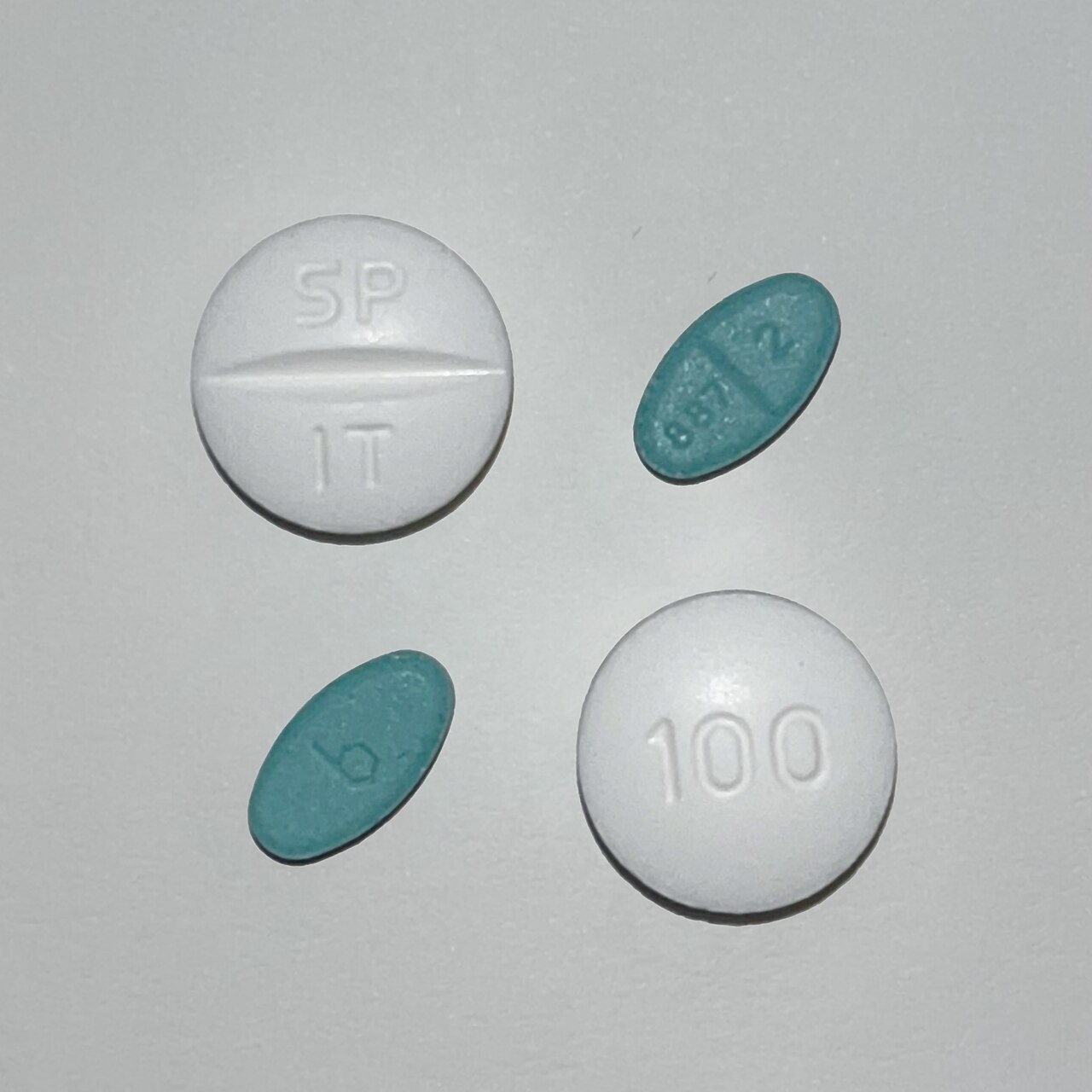
For a trans woman, feminizing hormone treatment usually means taking estrogen while also reducing or blocking the effects of testosterone. These hormonal changes cause some of the same secondary sexual characteristics that develop during female puberty.[1]
Estrogen can be taken in several forms. Common options include tablets, skin patches or gels, and injections; in some places, longer-lasting implants are also available.[2]
The different forms mainly differ in convenience, how steadily the hormone enters the body and how much it passes through the liver. For example, patches and injections bypass the digestive system and first-pass metabolism in the liver, while swallowed tablets do not.
Some trans women also take a separate testosterone blocker, such as spironolactone or another antiandrogen. The exact medicines and method of taking them differ between countries and individuals.
Breasts grow
Hormones cause real breast tissue to develop, including nipples and the tissue beneath them. Growth usually begins within several months and can continue for several years.[1]
A prospective study of 229 trans women found that breast growth during the first year was usually modest: 48.7% had less than an AAA cup after one year, and most breast development occurred during the first six months. Growth varied considerably between individuals.[3]


The body becomes curvier

Body fat tends to increase and becomes distributed in a more feminine pattern. This can make the hips, thighs and buttocks look fuller and can reduce the typically masculine shape of the torso.[4]
A meta-analysis found that trans women gained about 3 kg of body fat on average while losing about 2.4 kg of lean body mass during hormone treatment.[4]
Muscles become smaller
Lower testosterone and estrogen treatment usually reduce muscle mass and strength. Shoulders, arms and other muscular areas can therefore gradually look less strongly masculine.[5]
Hormones do not change the underlying adult skeleton in the same way, so shoulder width, height and other bone-based features usually remain.

The face can look more feminine
Hormones can redistribute fat beneath the skin of the face, making the cheeks and other soft tissues look different even without facial surgery. A study using 3D facial scans found measurable facial feminization after hormone treatment.[6]
Hormones cannot completely undo facial bone changes caused by an earlier testosterone-driven puberty.

Skin becomes softer
The skin commonly becomes softer and less oily after several months of feminizing hormones.[1]
Sweat and body odor can also change as testosterone activity decreases.[7]
Body hair decreases, but the beard may remain
Body hair commonly becomes thinner and grows more slowly. Facial hair is usually affected much less, so a trans woman may still need to shave or use laser or electrolysis if she wants a hairless face.[7]
Male-pattern scalp hair loss may also slow and can sometimes partly reverse.[1]
The testicles become smaller
The testicles usually shrink during feminizing hormone treatment because testosterone production and testicular activity are suppressed.[1]
A trans woman who has not had genital surgery still has a penis and testicles; hormones alone do not turn them into a vagina.
The penis may become smaller
The penis may become somewhat smaller during feminizing hormone treatment, especially as spontaneous erections become less frequent and erectile function decreases. The amount of change varies greatly, and there is no well-established average for how much penile size decreases in adult trans women.[8]

Erections become less frequent
Spontaneous and morning erections commonly become less frequent, and erections during sexual activity may become weaker or more difficult to maintain.[1]
This varies considerably. Some trans women can still become fully erect and use their penis for masturbation or penetrative sex, while others may have very little erectile function or lose the ability to achieve a usable erection altogether.

Ejaculation can decrease or disappear
The amount of ejaculatory fluid usually decreases, and some trans women eventually produce little or no visible fluid when they orgasm.[7]
An orgasm therefore does not necessarily produce the ejaculation that would commonly be expected before hormone treatment.
Sex drive can change
A prospective study of 401 trans women found that total, partnered and solitary sexual desire decreased during the first three months of hormone treatment. After 36 months, however, total and partnered desire were higher than before treatment, while solitary desire had returned to approximately its baseline level.[9]
The effect on sex drive is therefore not simply a permanent decrease caused by lower testosterone.
Orgasms can feel different
Hormones may change not only erections but also the experience of orgasm. In a study of 130 trans women who had used hormones for at least one year, participants reported taking longer to reach orgasm and having longer orgasms; more than half reported orgasm sensations in new or additional areas of the body.[10]
After hormone treatment, orgasms were also more often described as a longer, multiple-peak experience rather than a short single peak.[10]

Hormones do not simply change sexual orientation
A trans woman may be attracted to men, women, both or neither. Hormone treatment does not reliably make a trans woman become attracted to men.
A prospective study following 469 trans women found no systematic change in sexual orientation during hormone treatment and no relationship between partner preference and measured sex-hormone levels.[11]



Fertility decreases
Feminizing hormones suppress sperm production and can eventually cause severe reductions in fertility. Recovery after stopping hormones is possible for some people but cannot be guaranteed.[12]
A trans woman who may want genetically related children can freeze sperm before starting hormones. The stored sperm can later be used for insemination or IVF with a female partner or a gestational carrier.[13]
Some trans women who did not preserve sperm beforehand may regain sperm production after temporarily stopping hormones, and fertility clinics can sometimes retrieve sperm even when none is found in the ejaculate. These options are less predictable, so sperm banking before hormone treatment is generally the most reliable way to preserve fertility.[13]
What hormones do not change
Starting feminizing hormones after male puberty generally does not make the voice higher, substantially reduce the Adam's apple, shorten the body or completely reshape the adult skeleton. Voice changes usually require voice training or surgery, while many bone-based features simply remain unless they are surgically altered.[14]
Hormones also do not create a vagina. A vulva and vagina can be created through gender-affirming surgery, which is separate from hormone treatment.
Where do trans women get hormones?
Feminizing hormones are usually prescribed by a doctor or another qualified healthcare provider. The provider can choose appropriate medicines and doses, check hormone levels and monitor blood tests during treatment.[15]
Some trans people use DIY hormones bought online or obtained without a prescription, especially when access to transgender healthcare is difficult.[16]
DIY use is not always completely unmonitored. Some people try to reduce risk by arranging their own blood tests, checking hormone levels or other laboratory values, and using harm-reduction information from experienced communities or healthcare services. However, self-monitoring is not equivalent to full medical supervision, because interpreting results, choosing medicines and recognizing complications can still require clinical expertise.[17]
This is riskier without medical monitoring: estrogen can increase the risk of blood clots, spironolactone can cause dangerously high potassium or kidney problems, and some antiandrogens such as bicalutamide can cause liver injury.[18]
The safest way to use feminizing hormones is therefore with medical supervision, so doses can be adjusted and complications can be detected before they become serious.
Related adult search terms
Related search terms include:
- MTF HRT effects
- trans woman HRT
- feminizing hormones
- MTF hormone changes
- trans HRT body changes
- MTF before and after
More examples of trans body changes





References
- ↑ 1,1 1,2 1,3 1,4 1,5 1,6 1,7 Mayo Clinic. Feminizing hormone therapy. 2024. Mayo Clinic
- ↑ UCSF Gender Affirming Health Program. Overview of feminizing hormone therapy. UCSF
- ↑ de Blok C. J. M. et al. Breast Development in Transwomen After 1 Year of Cross-Sex Hormone Therapy: Results of a Prospective Multicenter Study. Journal of Clinical Endocrinology & Metabolism, 2018. PubMed
- ↑ 4,1 4,2 Klaver M. et al. Cross-sex hormone therapy in transgender persons affects total body weight, body fat and lean body mass: a meta-analysis. Andrologia, 2017. PubMed
- ↑ Harper J. et al. How does hormone transition in transgender women change body composition, muscle strength and haemoglobin? British Journal of Sports Medicine, 2021. PubMed
- ↑ Tebbens M. et al. Gender-Affirming Hormone Treatment Induces Facial Feminization in Transwomen and Masculinization in Transmen: Quantification by 3D Scanning and Patient-Reported Outcome Measures. Journal of Sexual Medicine, 2019. PubMed
- ↑ 7,1 7,2 7,3 Deutsch M. B. Overview of feminizing hormone therapy. UCSF Gender Affirming Health Program. UCSF
- ↑ Planned Parenthood South Atlantic. Gender-Affirming Health Care. Planned Parenthood
- ↑ Defreyne J. et al. Sexual Desire Changes in Transgender Individuals Upon Initiation of Hormone Treatment: Results From the Longitudinal European Network for the Investigation of Gender Incongruence. Journal of Sexual Medicine, 2020. PubMed
- ↑ 10,1 10,2 Zaliznyak M. et al. Effects of Gender-affirming Hormone Therapy on Orgasm Function of Transgender Men and Women: A Long Term Follow Up. Urology, 2023. PubMed
- ↑ 11,1 11,2 11,3 Defreyne J. et al. Sexual orientation in transgender individuals: results from the longitudinal ENIGI study. International Journal of Impotence Research, 2021. PubMed
- ↑ Rodriguez-Wallberg K. A., Pfau D. R. Effects of feminizing gender-affirming hormone therapy on testicular function and reproductive capacity: review of data from clinical and experimental studies. Reproduction, 2025. PubMed
- ↑ 13,1 13,2 UCSF Gender Affirming Health Program. Fertility options for transgender persons. UCSF
- ↑ Endocrine Society. Transgender Health Treatments. Endocrine Society
- ↑ Endocrine Society. Gender Dysphoria/Gender Incongruence Guideline Resources. Endocrine Society
- ↑ Kennedy C. E. et al. Self-administration of gender-affirming hormones: a systematic review of effectiveness, cost, and values and preferences of end-users and health workers. 2022. PMC
- ↑ Baker J. T., Buzzanell P. M. "Not just rebellious, it's revolutionary": Do-it-yourself hormone replacement therapy as Liberatory Harm Reduction. 2024. PubMed
- ↑ UCSF Gender Affirming Health Program. Overview of feminizing hormone therapy. UCSF