
Butt Plug
A butt plug (also called an anal plug) is a sex toy designed to sit inside the anus and rectum for sexual stimulation, with a broad base remaining outside the body. Its characteristic shape allows it to stay in place rather than requiring repeated movement.[1]
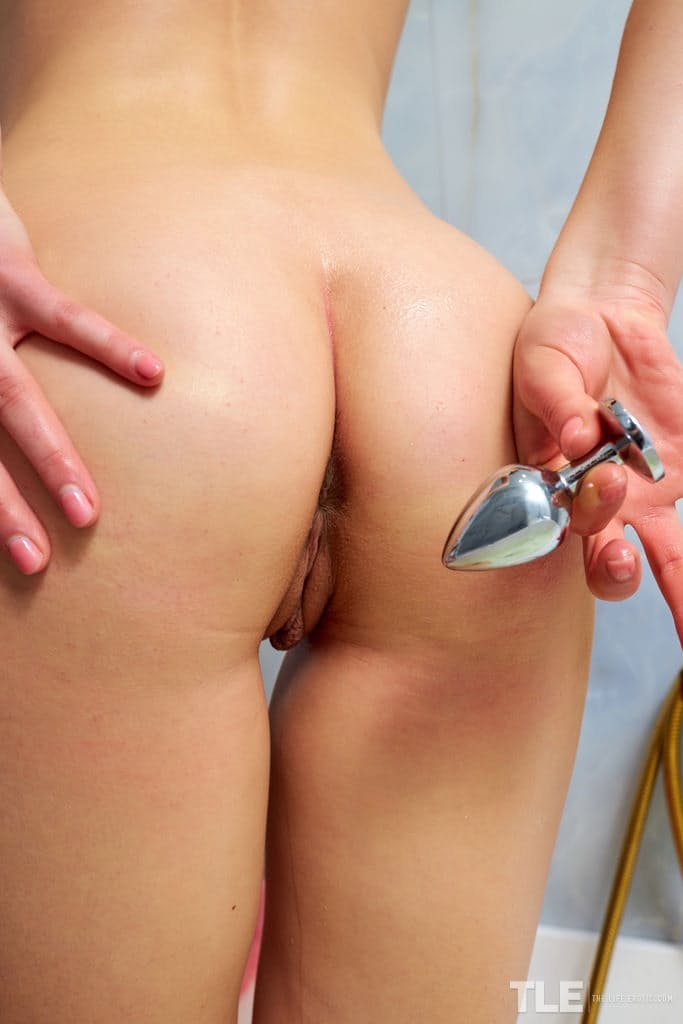
Butt plugs are used by adults of different genders and sexual orientations, alone or with a partner. Enjoying anal stimulation does not establish someone's sexual orientation.[1]
Shape and function
A typical plug has a tapered tip, a wider body, a narrow neck and a flared base. The body sits internally while the anal opening rests around the narrower neck; the base is intended to prevent the whole toy from slipping inside.[2]
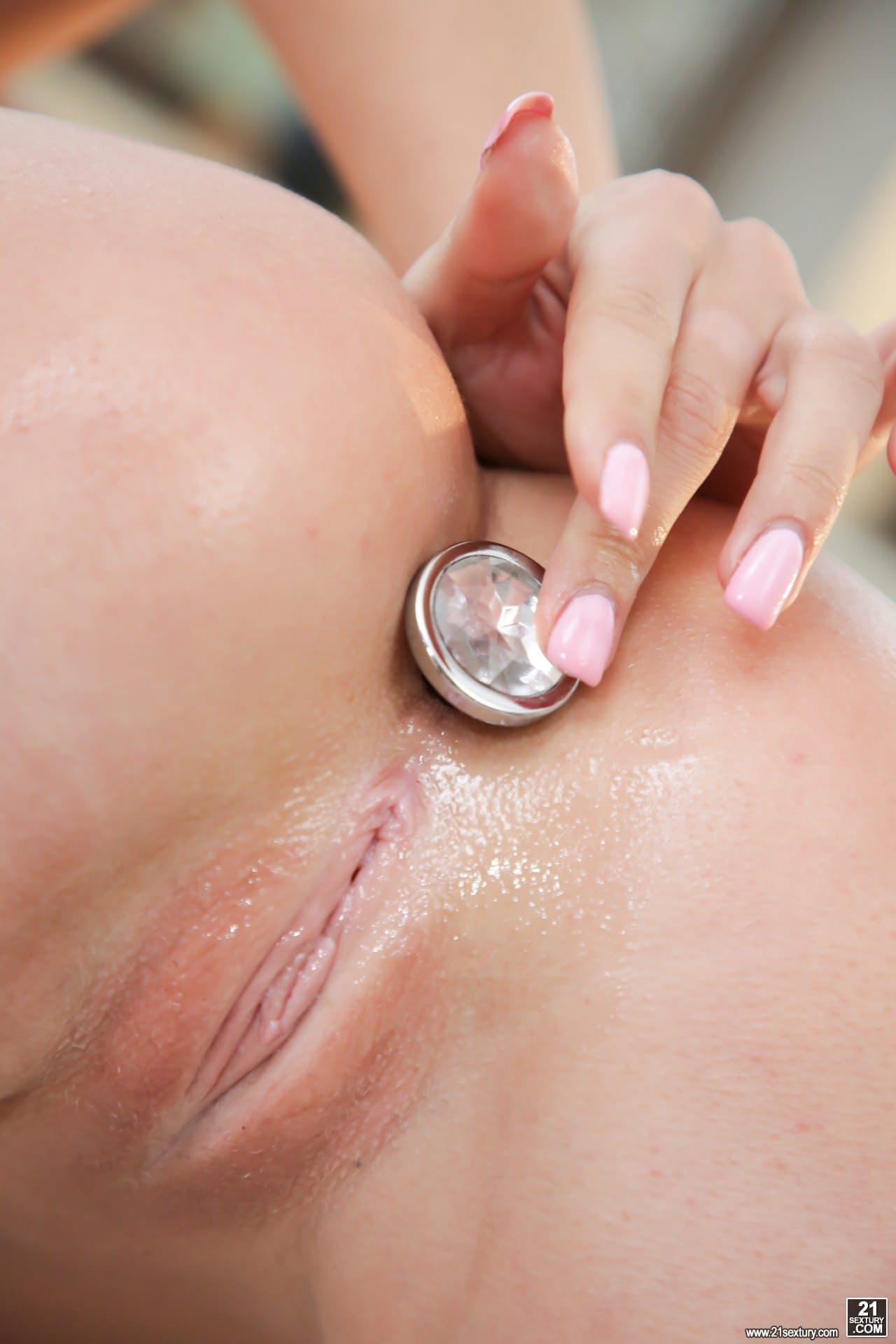
The outside view therefore reveals only part of an inserted plug. A visible decorative jewel is the end of the device, not a reliable indication of the size or shape concealed inside.
How is it different from a dildo?
A dildo is generally designed for penetrative movement, whereas a plug is shaped to remain in position. A vibrating plug adds vibration to this basic design; a plug does not need a motor to be a sex toy.[2]
Anal beads are a series of connected rounded sections rather than one bulb and neck. A prostate massager is shaped to direct pressure toward the prostate; a conventional plug is not necessarily designed to do that.[3]
Sensations and sexual response
Descriptions include pressure, stretching and a sense of fullness. These are possible experiences, not a standardized sensation: a plug that feels pleasant to one person may feel distracting or uncomfortable to another.[4]
The anal region has many sensory nerve endings. Its sphincters are rings of muscle controlling the opening; anxiety can increase muscle tension and make penetration harder. Physical pressure and the emotional experience of that pressure are therefore different but interacting parts of the experience.[5]
Some people use a plug alongside clitoral or penile stimulation. For someone with a prostate, pressure through the rectal wall may also stimulate that gland. Anal stimulation can contribute to orgasm, but neither enjoyment nor orgasm is guaranteed.[1]
A partner can observe the external base, but cannot read comfort, arousal or consent from its appearance. Ask the person wearing it; accepting a plug does not imply agreement to other penetration.[1]
Size, materials and design
Compare actual dimensions rather than relying only on labels such as “small” or “beginner.” The widest insertable part, neck and insertable length describe different parts of the object; a photograph without a scale cannot establish any of them.
For a first plug, a small, smooth design is a more cautious starting point than a large or textured one. The base must remain outside and be broad enough to act as a stopper. A decorative end alone is not evidence that the design is safe.[2]
Prefer a clearly identified nonporous material, such as 100% silicone, stainless steel or break-resistant glass intended for sex toys. These surfaces are easier to clean than porous materials. A metallic appearance in a photograph does not establish stainless-steel composition.[3]
Check the surface and base for damage before use. Cleaning requirements depend on the whole product: a motor, coating or attached ornament may limit immersion or heat treatment even when the main material tolerates it.[2]
Lubrication, comfort and duration
The anus does not provide enough natural lubrication for penetration. Added lubricant reduces friction on delicate tissue; wetness elsewhere on the body is not a substitute.[6]
Choose a lubricant compatible with both the toy and any condom. Water-based products are broadly compatible; oil-based products can damage latex condoms. Check the manufacturer's advice before combining silicone lubricant with a silicone toy.[6][3]
Insertion and removal should be gradual and never forced. Stop if it hurts; increasing or persistent pain is a reason to stop, not a target to overcome. The widest part has to pass the opening again during removal, so pulling abruptly is inappropriate.[5][2]
How long can a plug stay in?
There is no universally validated wear time in the sources cited here. Advice such as a 30-minute limit is precautionary guidance, not a clinical guarantee that every plug is safe for every person up to that point. Follow the product's limits and remove it sooner if uncomfortable.[4]
Avoid sleeping with a plug inserted or treating all-day wear as a safe default. Prolonged pressure can cause irritation or swelling, and sleep prevents reliable monitoring of discomfort. Being able to tolerate a plug initially does not establish that it will remain comfortable hours later.[4]
Hygiene and warning signs
Clean the toy according to its instructions before and after use, allow it to dry and store it clean. Fecal residue is possible during anal use; its absence does not prove that a surface is free of microorganisms.[3][5]
Change condoms between users. Before a toy or finger used anally touches the vagina, wash it carefully or use a fresh condom where applicable; moving it directly can transfer bacteria.[7][8]
Aggressive internal cleaning is not a prerequisite. Excessive douching and irritating cleaning products can damage the anal lining. Postpone use if the area is painful or bleeding, and seek medical advice for persistent symptoms.[5]
What if a plug becomes stuck?
If the base slips inside or the plug cannot be removed easily, seek urgent medical help rather than continuing forceful attempts. Significant bleeding, severe or worsening rectal or abdominal pain, or signs of infection require prompt assessment.[4]
Retained toys sometimes need removal under anesthesia or surgery. A Swedish hospital study documented such complications, but its patients were people already presenting with retained objects: their outcomes do not measure the risk per ordinary plug-use session.[9]
Terminology and interpreting images
Related terms describe either the object or a feature of its design:
- butt plug and buttplug: spelling variants of the same term.
- anal plug: an alternative name.
- vibrating butt plug: a plug incorporating a motor.
- jeweled butt plug: a plug with a decorative external end.
- silicone butt plug, metal butt plug and glass butt plug: material descriptions that should be checked against product specifications.
A photograph can illustrate placement or appearance. It cannot establish how long the device has been worn, whether it is comfortable, or whether its user experiences an orgasm. Images of large toys also do not establish a typical or desirable size.
See also
References
- ↑ 1,1 1,2 1,3 1,4 Santos-Longhurst A. Everything You Need to Know About Butt Plugs. Healthline, updated 2026; medically reviewed by Jennifer Litner. Overview and uses
- ↑ 2,1 2,2 2,3 2,4 2,5 Smith Haghighi A. Everything to know about butt plugs. Medical News Today, 2024; medically reviewed by E. Mimi Arquilla. Design, types and care
- ↑ 3,1 3,2 3,3 3,4 Planned Parenthood. Sex Toys. Types of toys, materials and safety
- ↑ 4,1 4,2 4,3 4,4 Santos-Longhurst A. You Shouldn't Wear a Butt Plug All Day — But If You Do, Read This. Healthline, updated 2026; includes comments from surgeon Evan Goldstein. Fullness, wear time and risks
- ↑ 5,1 5,2 5,3 5,4 Cleveland Clinic. Is Anal Sex Safe? 2022; guidance from gastroenterologist Michelle Inkster. Anatomy, lubrication and injury prevention
- ↑ 6,1 6,2 Planned Parenthood. How do you use lube with condoms? 2024. Lubrication and condom compatibility
- ↑ Planned Parenthood. How Do I Prevent Vaginitis? Preventing transfer from anus to vagina
- ↑ Planned Parenthood. How Do I Make Sex Safer? Condoms on shared sex toys
- ↑ Dahlberg M, et al. Retained sex toys: an increasing and possibly preventable medical condition. International Journal of Colorectal Disease, 2018. Study