
Pussy Fluids
Pussy fluids is an informal umbrella term for the different fluids and moisture that can normally appear in, around or come from the vulva, vagina and nearby urinary and reproductive structures. These include ordinary vaginal moisture and discharge, cervical mucus, sexual lubrication or grool, vestibular-gland secretions, female ejaculation, squirting, menstrual fluid and urine.
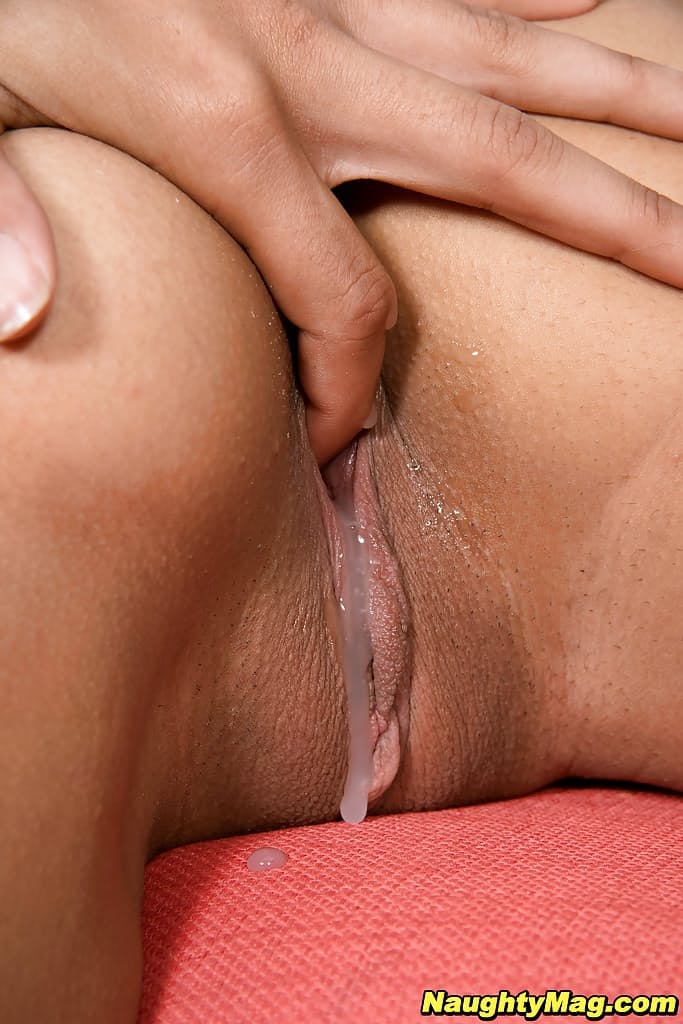
These fluids do not all come from the same place. Some are present during ordinary daily life, some vary through the menstrual cycle, some increase during sexual arousal, and others may be released during intense stimulation or orgasm. Several can also be present at the same time.
What counts as a pussy fluid?
"Pussy fluids" is not a formal medical category. It is a practical adult-encyclopedia term for fluids that a person may actually see or feel around the vulva or vaginal entrance.
The distinction between where a fluid is seen and where it originates is important. A fluid visible between the inner labia may have come from the vagina, cervix, vestibular glands, urethra or another source.
The vagina itself does not contain ordinary mucus-secreting glands. Fluid can pass through its wall, while secretions produced higher in the reproductive tract can travel through it toward the vaginal entrance.[1]
This also means that the everyday expression vaginal fluid can refer to several different substances rather than one chemically uniform liquid.
Normal moisture and discharge
A pussy does not have only two states — completely dry or sexually wet. Some moisture and secretion are part of normal genital physiology even when a woman is not sexually aroused.
Moisture around the inner labia
The inner vulva is different from ordinary external skin. The inner labia are hairless and relatively moist, while the vulvar vestibule contains nonkeratinized tissue and gland openings.[2]
This baseline moisture may be subtle. The tissue can simply look slightly shiny or feel less dry than the surrounding external skin without there being enough fluid to form drops or strings.
A woman therefore does not need to be sexually aroused for the tissue between her inner labia to be moist. Conversely, the amount of visible moisture varies, so an absence of obvious wetness in a photograph does not by itself indicate abnormal dryness.
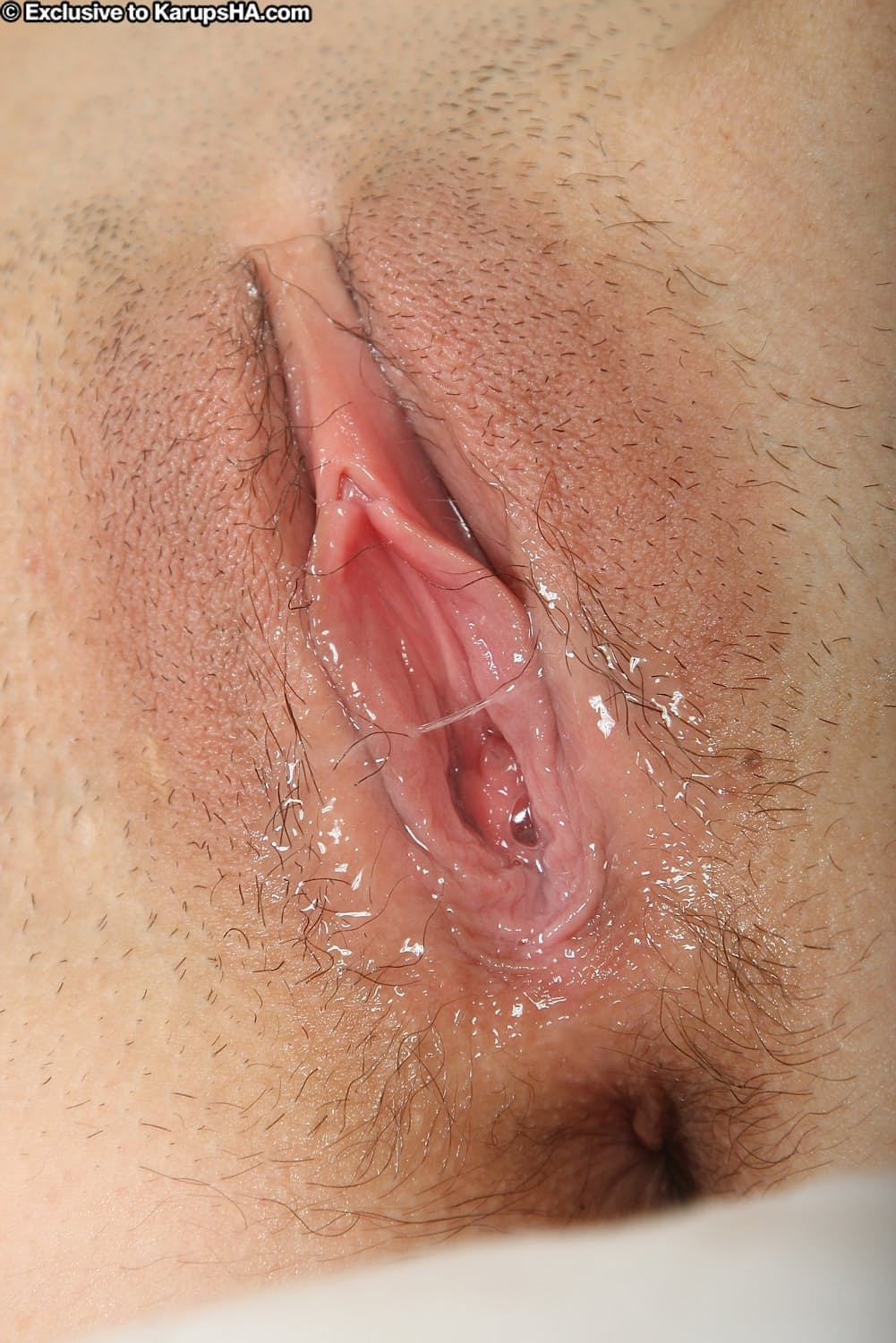
Normal vaginal discharge
Vaginal discharge is normal from puberty onward. ACOG describes normal discharge as mostly water with microorganisms and notes that its amount and composition change through the menstrual cycle.[3]
Normal discharge is usually clear to white and generally does not have a strong noticeable odor.[3]
The material that appears as discharge is not produced by a single "vaginal discharge gland." It reflects fluid and material from several sources, including vaginal transudation, cervical secretions, shed cells and the normal vaginal microbial environment.
Discharge can reach the vulva and collect around the vaginal entrance or between the labia. A woman may therefore notice moisture on underwear or toilet paper without having been sexually aroused.
Cervical mucus
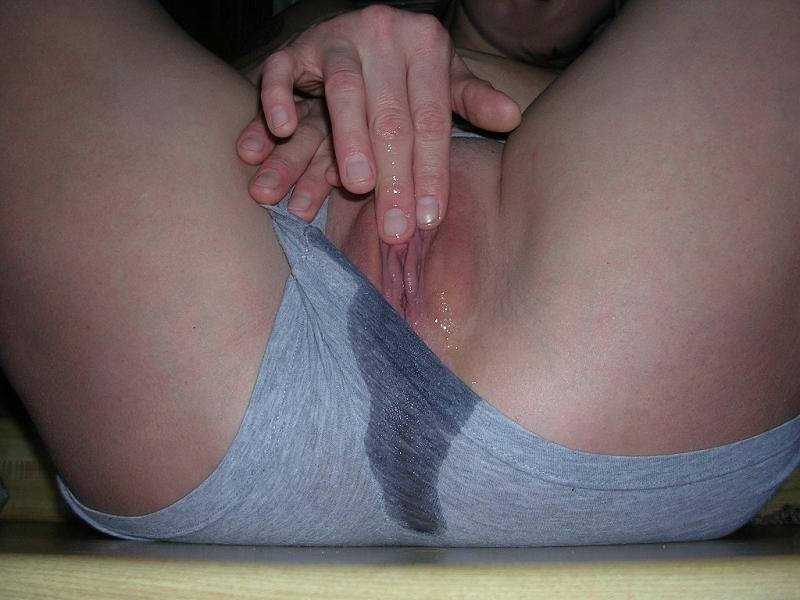
Cervical mucus is produced by the cervix and travels through the vagina. Its physical properties vary under hormonal influence during the menstrual cycle.[4]
Near ovulation, cervical mucus typically becomes more abundant, thinner, clearer, more slippery and more stretchable. ACOG notes that mucus peaks roughly one to two days before ovulation and may appear as clear, thin and stretchy vaginal discharge.[5]
This can resemble sexual lubrication visually. Clear stretchy fluid around the vaginal entrance therefore does not automatically prove that a woman is sexually aroused.
Fluids during sexual arousal
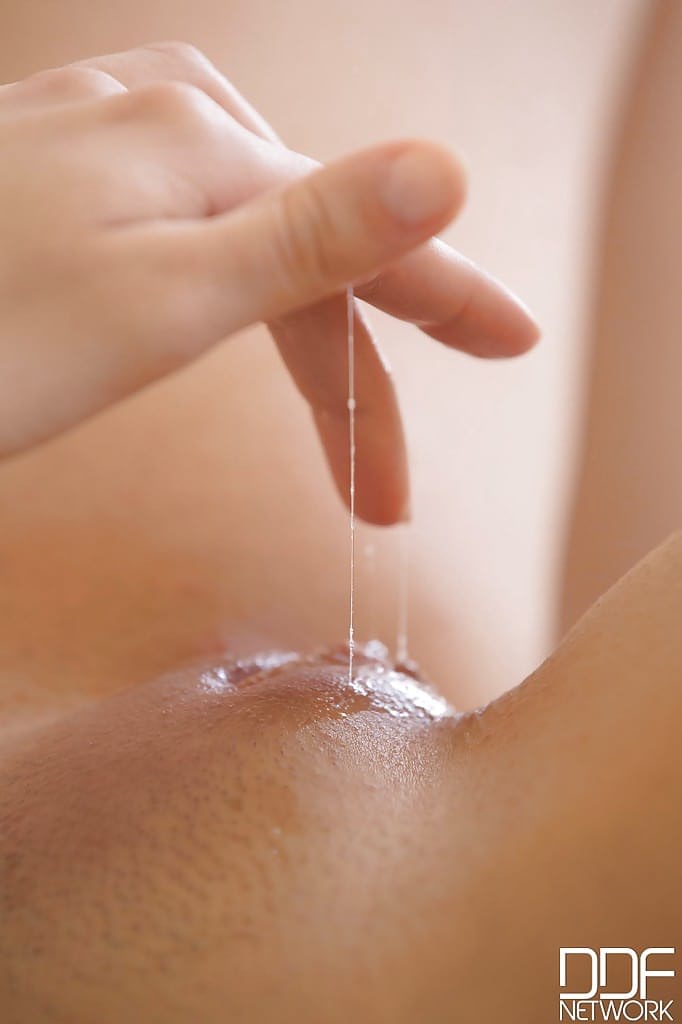
Sexual arousal can substantially increase genital wetness.
Vaginal lubrication
One major mechanism is vaginal transudation. Increased genital blood flow causes plasma-derived fluid to pass through the vaginal wall and enter the vaginal lumen.[1]
This fluid contributes to the familiar slippery wetness that develops with genital arousal. A review of female sexual fluids describes sexual lubrication as a variable quantity of plasma ultrafiltrate produced through transvaginal transudation.[6]
The lubrication may remain mostly inside the vagina or spread outward over the vaginal entrance and inner labia. During masturbation or sex it can also coat fingers, a penis or a sex toy.

There is no fixed amount that every aroused woman should produce. Visible wetness varies between individuals and between different situations in the same person.
Grool
Grool is adult slang for vaginal lubrication associated with sexual arousal rather than the scientific name of an additional gland or fluid.[7]
In practice, the fluid called grool may already contain a mixture of arousal-related transudate, cervical mucus and normal vaginal secretions.
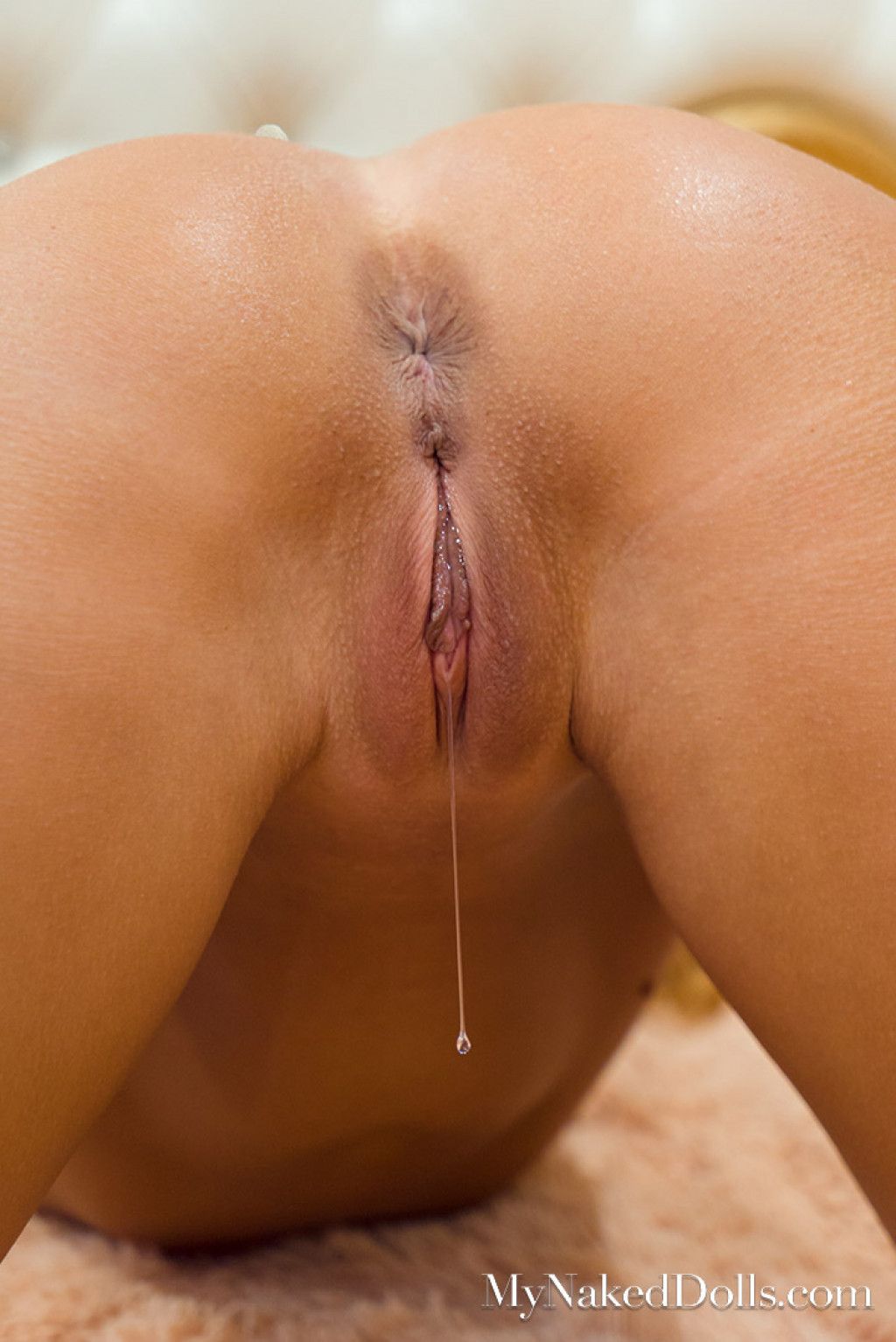
This can help explain why grool does not always have exactly the same appearance. It may be almost watery and transparent, more slippery, or visibly stringy depending on the mixture of fluids present.
Vestibular gland secretions
The Bartholin glands, also called the greater vestibular glands, open near the vaginal entrance and produce mucinous secretion.
They are traditionally described as contributing to vulvar lubrication. A 2025 review confirmed that the glands produce mucin, while also emphasizing that their precise contribution to sexual lubrication remains surprisingly poorly studied.[8]
Smaller vestibular glands may also contribute secretions to the vulvar vestibule, but their anatomy and functional importance are less well characterized.[8]
It is therefore too simplistic to say that all sexual wetness is produced by the Bartholin glands. Vaginal transudation is a major mechanism, while glandular secretions can contribute to the overall mixture.
Fluids released during intense stimulation or orgasm
Some sexual fluids are released through the urethral region rather than gradually coating the vagina.
Female ejaculation
Female ejaculation is usually defined narrowly as the release of a small quantity of secretion from the paraurethral or Skene glands.
Modern reviews describe it as a few milliliters of relatively thick fluid containing a high concentration of prostate-specific antigen.[9]
The fluid is commonly described as whitish or milky rather than completely transparent.[6]
Because the amount can be small, female ejaculation may not create a dramatic visible event. It can mix immediately with ordinary lubrication and remain around the urethral or vaginal entrance.
Squirting
Squirting is physiologically different from female ejaculation.
A 2022 review defines squirting as the transurethral release of roughly 10 mL or more of transparent fluid whose principal source is the urinary bladder.[9]
The fluid is similar to diluted urine, although small amounts of paraurethral secretion can be mixed into it. Female ejaculation and squirting can therefore occur at the same time.[9]
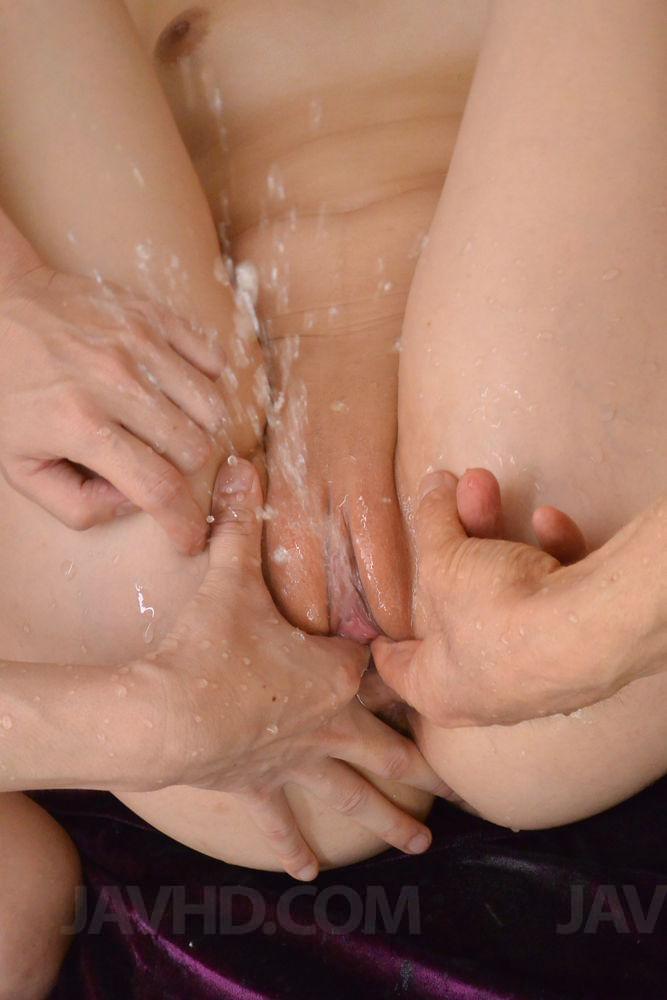
Squirting is usually much more visually obvious than female ejaculation because substantially more fluid can be released and it may appear as a stream, gush or spray.

Can all these fluids mix?
Yes.
A sexually aroused woman may already have vaginal lubrication and cervical or vaginal secretions present before female ejaculation or squirting occurs.
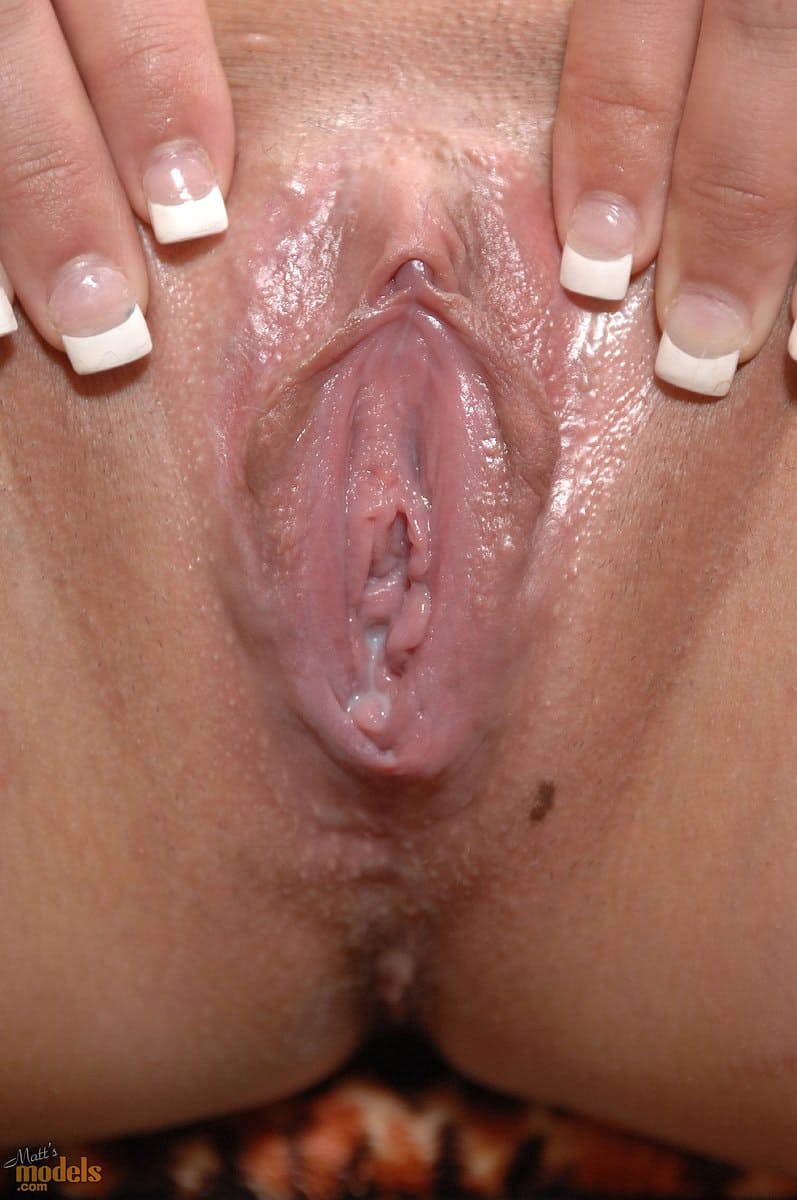
After an intense sexual event, fluid visible on the pussy can consequently be a mixture of lubrication + ordinary vaginal secretions + cervical mucus + female ejaculate + squirting fluid.
The presence of a mixture is one reason why color, consistency or quantity cannot always reveal the exact physiological source.
Menstrual, urinary and other nonsexual fluids
Not every fluid seen around the pussy is part of sexual arousal.
Menstrual fluid
The vagina serves as the passage through which menstrual fluid and tissue leave the uterus.[1]
Menstrual material therefore appears at the vaginal opening even though its main source is the uterus rather than the vulva or vaginal wall.
Its appearance can range from relatively liquid blood to thicker material containing mucus, endometrial tissue and clots.
Urine
Urine exits through the urethral opening, which is separate from the vaginal entrance.
During normal urination, urine can contact the surrounding vulva and remain temporarily between the labia. Fluid found externally around the pussy is therefore not necessarily vaginal in origin.
Urinary leakage can also occur during sexual activity in some people. This should not automatically be classified as squirting simply because it happens during sex.
Changes that may indicate a problem
Normal genital fluids vary considerably, so a single appearance is not a useful definition of health.
A new persistent change in discharge color, odor, quantity or consistency can be more informative than comparing a woman's discharge with someone else's. ACOG lists such changes among reasons that vaginal discharge may be abnormal.[3]
Persistent unusual dryness can also occur, particularly when estrogen levels are lower, such as around menopause, after childbirth or during breastfeeding. Vaginal moisturizers and lubricants can help with dryness in appropriate situations.[10]
Fluids added during sex
A wet pussy after sex does not necessarily contain only fluids produced by the woman's body.
Semen can remain in the vagina and later leak outward through the vaginal entrance after penile-vaginal sex.
Saliva may be present after oral sex or when it is deliberately used during sexual activity.

Commercial sexual lubricant can coat the vulva, vaginal entrance, fingers, penis or toys and may visually resemble heavy natural lubrication.
Water from a shower or bath can also make the vulva appear unusually wet.
These external fluids matter when interpreting photographs or videos. A very wet-looking pussy cannot by itself establish how much natural lubrication a woman's body produced.
How can pussy fluids be told apart?
The most useful clues are where the fluid comes from, how it appears, how much is present and when it appears.
Normal vaginal discharge is commonly clear to white, is present outside sexual activity and changes through the menstrual cycle.[3]
Cervical mucus can become particularly clear, slippery and stretchy near ovulation.[5]
Sexual lubrication or grool usually develops progressively during genital arousal and coats the vagina, vaginal entrance and nearby vulvar tissue.[6]
Female ejaculation is usually a small-volume, thicker and often whitish or milky secretion from the paraurethral glands.[6][9]
Squirting is usually a much larger, clearer and more watery transurethral release whose principal source is the urinary bladder.[9]
Urine also exits through the urethra and can therefore be difficult to distinguish from squirting based only on a photograph or video.
A mixture of fluids can defeat even these practical clues. The exact biochemical source of a wet patch, drop or string of fluid usually cannot be diagnosed from appearance alone.
Related adult search terms
Related adult and search terms include
- pussy fluids,
- pussy fluid,
- pussy juice,
- vaginal fluids,
- vaginal moisture,
- vaginal discharge,
- wet pussy,
- pussy lubrication,
- vaginal lubrication,
- arousal fluid,
- grool,
- female cum,
- girl cum,
- female ejaculation,
- squirting,
- cervical mucus,
- and types of vaginal fluid.
See also
References
- ↑ 1,1 1,2 1,3 Gold JM, Vadakekut ES. Physiology, Vaginal Structure and Function. StatPearls, updated 2026. NCBI Bookshelf
- ↑ Vulvar Care: Reviewing Concepts in Daily Hygiene. 2025. PubMed Central
- ↑ 3,1 3,2 3,3 3,4 American College of Obstetricians and Gynecologists. Vulvovaginal Health. ACOG
- ↑ Han L, Taub R, Jensen JT. Cervical mucus and contraception: what we know and what we don't. Contraception, 2017. PubMed
- ↑ 5,1 5,2 American College of Obstetricians and Gynecologists. Trying to Get Pregnant? Here's When to Have Sex. ACOG
- ↑ 6,1 6,2 6,3 6,4 Pastor Z, Chmel R. Differential diagnostics of female "sexual" fluids: a narrative review. International Urogynecology Journal, 2018. PubMed
- ↑ Wiktionary contributors. grool. Wiktionary
- ↑ 8,1 8,2 Review of the vestibular glands: functional anatomy, clinical significance, and role in sexual function. Sexual Medicine Reviews, 2025. PubMed
- ↑ 9,1 9,2 9,3 9,4 9,5 Pastor Z, Chmel R. Female ejaculation and squirting as similar but completely different phenomena: A narrative review of current research. Clinical Anatomy, 2022. PubMed
- ↑ American College of Obstetricians and Gynecologists. Experiencing Vaginal Dryness? Here's What You Need to Know. ACOG