
Innie Pussy vs. Outie Pussy
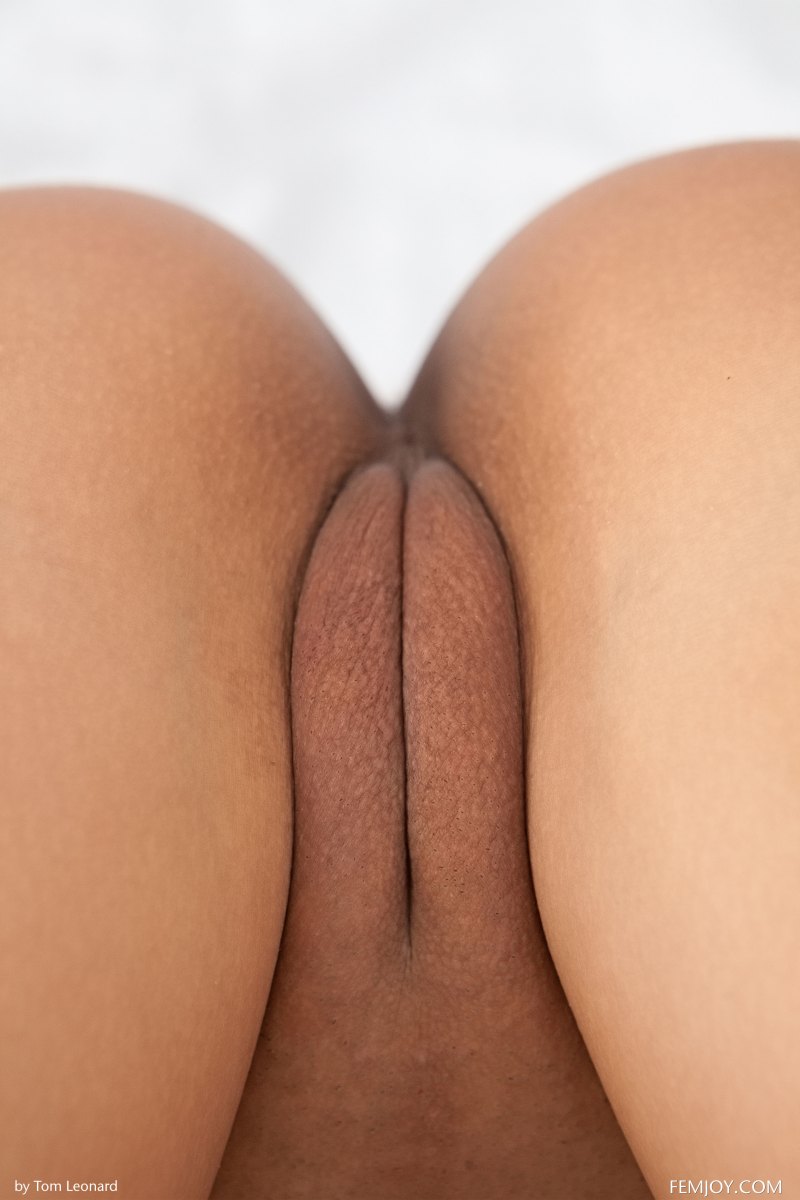

Innie pussy and outie pussy are informal adult terms for two broad ways a pussy can look. The distinction mainly describes whether the inner labia are hidden between the outer labia or remain visibly exposed beyond them.
An innie has little or no inner labia visible when the pussy is viewed in a relaxed position. An outie has inner labia that are visibly exposed or protrude beyond the outer labia. These are descriptive slang terms rather than medical categories, and many vulvas fall somewhere between the two.
Related search terms include- innie pussy,
- outie pussy,
- innie vagina,
- outie vagina,
- small labia,
- visible labia,
- protruding labia
- and long labia.
"Innie vagina" and "outie vagina" are common expressions, although anatomically they describe the vulva, not the vagina inside the body.
Obsah
- 1 What makes a pussy an innie?
- 2 What makes a pussy an outie?
- 3 The same pussy can look more innie or outie in different positions
- 4 Innies and outies are not two exact anatomical types
- 5 Are outies unusual?
- 6 An innie can look more like an outie during arousal
- 7 Does having a lot of sex cause an outie?
- 8 Does childbirth create an outie?
- 9 Does an innie mean a tighter vagina?
- 10 Do outies feel different?
- 11 Which appearance do men prefer?
- 12 Porn contains a wide range of labial appearances
- 13 Both are normal pussy shapes
- 14 References
What makes a pussy an innie?
In an innie pussy, the outer labia form most of the visible outline of the vulva. The inner labia remain mostly inside the genital cleft and may become visible only when the outer labia are spread apart.
Innies can still vary considerably. The outer labia may be thick or thin, the genital cleft may appear tightly closed or partly open, and small portions of the inner labia or clitoral hood may still be visible.
What makes a pussy an outie?
In an outie pussy, part of one or both inner labia extends visibly beyond the outer labia. The protruding tissue may be short and subtle or form much larger folds.
An outie does not have to be symmetrical. One inner labium can extend farther than the other, and uneven labia are considered part of normal vulvar variation.[1]
The same pussy can look more innie or outie in different positions
The innie–outie distinction works best when the vulva is viewed in a relaxed position without the labia being manually spread.
An innie can look much more open when the legs are spread widely, when a woman squats, or when the outer labia are pulled apart. Inner labia that were almost invisible can then become clearly exposed.
This does not mean that the anatomy has changed. It only shows that innie and outie describe visible appearance, not two rigid anatomical categories.
Innies and outies are not two exact anatomical types
The distinction is useful visually, but there is no biological boundary at which a vulva suddenly changes from an innie into an outie. Labial size and protrusion exist on a continuous spectrum.
Measurements of female genital anatomy show very wide variation in the length, width, color and shape of the labia.[2]
Are outies unusual?
No. In a study of 244 women, 56% had visible inner labia. The researchers concluded that visible and hidden inner labia were approximately equally common.[3]
The exact percentage of "innies" and "outies" depends on how those informal words are defined. A slightly visible inner labium, for example, may be called an outie by one person and an intermediate appearance by another.
An innie can look more like an outie during arousal
The appearance is not completely static. During sexual arousal, increased blood flow can make the inner labia fuller and wider.
An MRI study of 11 premenopausal and 8 postmenopausal women found that labia minora width increased during sexual arousal in both groups, together with increased blood-related enhancement of the labia minora.[4]
For a woman whose inner labia are normally mostly hidden, this temporary swelling can make them more noticeable. It does not mean that her basic anatomy has permanently changed from an innie to an outie.
Does having a lot of sex cause an outie?
No evidence shows that protruding inner labia are a sign that a woman has had a lot of sex. In one anatomical study, genital measurements were not significantly associated with women's history of sexual activity.[2]
The idea sometimes appears in insulting adult slang, where prominent labia are described as having been "stretched" by sex. Labial appearance cannot be used to determine a woman's number of sexual partners.
Does childbirth create an outie?
The appearance of the vulva can change during pregnancy and over the course of a woman's life, but simply seeing an outie does not show whether she has given birth.[1]
In a study of 244 women, measurements of the labia minora were not significantly associated with parity — the number of previous births.[3]
An outie should therefore not be interpreted as evidence that childbirth has permanently stretched the inner labia.
Does an innie mean a tighter vagina?
No. Innie and outie describe the visibility of the external labia, not the dimensions or muscular tone of the vagina.
The inner labia are folds of the vulva outside the vaginal canal. A pussy can therefore look tightly closed from the outside because the outer labia meet in the middle while this tells you very little about what the vagina itself will feel like during penetration.
Likewise, large protruding inner labia do not mean that a vagina is "loose." The appearance of the labia should not be used as a visual test of vaginal tightness.
Do outies feel different?
The inner labia are highly vascular folds containing many neural structures, so they can contribute to genital sensation and sexual arousal.[5]
However, larger or more visible labia do not automatically mean greater sensitivity. In a study of 62 healthy sexually active women aged 21–60, ratings of labial and introital sexual sensitivity were broadly similar regardless of whether women described their labia as small, average-sized or large.[6]
An outie may therefore provide more visibly exposed labial tissue, but appearance alone cannot tell a partner how sensitive that tissue will be or what kind of stimulation the woman will prefer.
Which appearance do men prefer?
Research suggests that some men have preferences about labial appearance, but there is no good population estimate specifically comparing innie versus outie pussy.
In a U.S. web survey of 1,847 men with a median age of 55, respondents rated photographs showing different labial sizes. 43% rated small labia as attractive or appealing, 43% rated medium-sized labia as attractive or appealing, and 24% rated large labia that way. At the same time, 36% were neutral toward all three images.[7]
The study also found that 75% of respondents would not encourage a female partner to change her genital appearance.[7]
These results concern perceived labial size, not the innie–outie distinction itself. Smaller inner labia are more likely to contribute to an innie appearance, but the study cannot be converted into an exact percentage of men who prefer innies over outies.
Porn contains a wide range of labial appearances
Pornography is sometimes assumed to show almost exclusively small or hidden inner labia. One study examined 25 highly viewed videos from five major free pornography websites and found considerably more variation.[8]
In that sample, 44% of the women were classified as having labia minora larger than the labia majora, 36% had approximately equal lengths, and 16% had no visible labia minora.[8]
These categories are not exactly the same as innie and outie, because the researchers compared labial dimensions rather than using those slang labels. They nevertheless show that highly viewed pornography includes substantial variation in how prominent the inner labia appear.
The study was small and examined a selected set of highly viewed videos, so these percentages should not be treated as the distribution of vulvar anatomy either in pornography as a whole or among women generally.
Both are normal pussy shapes
Neither an innie nor an outie is the medically correct shape of a pussy. ACOG notes that inner labia often extend beyond the outer labia, but it is also normal when they do not.[1]
The useful meaning of innie vs. outie is therefore visual: it gives ordinary people and adult audiences simple words for a noticeable difference in vulvar appearance. It should not be interpreted as a measure of cleanliness, sexual experience, vaginal tightness or sexual quality.
References
- ↑ 1,1 1,2 1,3 American College of Obstetricians and Gynecologists. Vaginal Rejuvenation, Labiaplasty, and Other Female Genital Cosmetic Surgery. ACOG
- ↑ 2,1 2,2 Lloyd J, Crouch NS, Minto CL, Liao LM, Creighton SM. Female genital appearance: "normality" unfolds. BJOG, 2005. PubMed
- ↑ 3,1 3,2 Lykkebo AW, Drue HC, Lam JUH, Guldberg R. The Size of Labia Minora and Perception of Genital Appearance: A Cross-Sectional Study. Journal of Lower Genital Tract Disease, 2017. PubMed
- ↑ Suh DD, Yang CC, Cao Y, et al. MRI of female genital and pelvic organs during sexual arousal. Journal of Psychosomatic Obstetrics & Gynecology, 2004. PubMed
- ↑ Ginger VA, Cold CJ, Yang CC. Structure and innervation of the labia minora: more than minor skin folds. Female Pelvic Medicine & Reconstructive Surgery, 2011. PubMed
- ↑ Schober JM, Martin Alguacil N, Cooper RS, Pfaff DW, Meyer-Bahlburg HFL. Self-assessment of anatomy, sexual sensitivity, and function of the labia and vagina. Clinical Anatomy, 2015. PubMed
- ↑ 7,1 7,2 Mazloomdoost D, Crisp CC, Westermann LB, et al. Survey of male perceptions regarding the vulva. American Journal of Obstetrics and Gynecology, 2015. PubMed
- ↑ 8,1 8,2 Dubinskaya A, Dallas K, Eilber K, Scott V, Anger J. Female Genitalia in Pornography: The Source of Labiaplasty Trends? The Journal of Sexual Medicine, 2022. Oxford Academic